



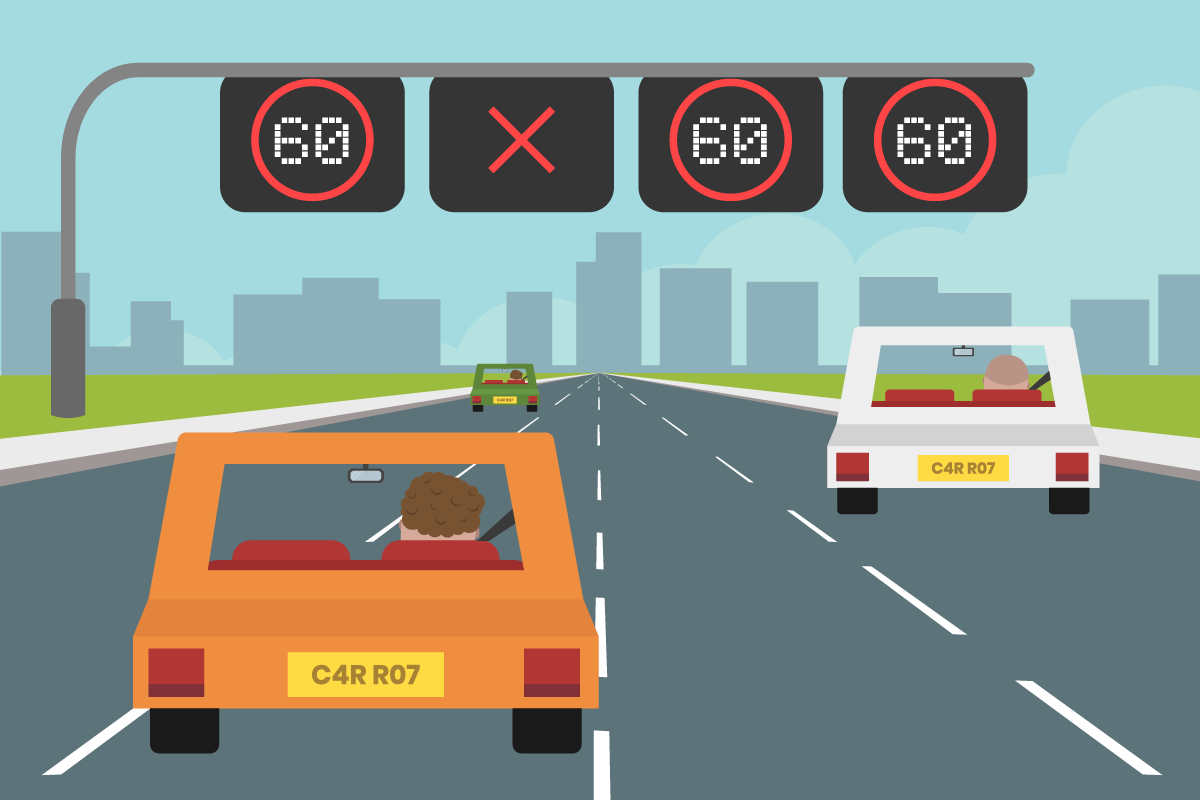
A speed limit tells you the fastest you’re allowed to drive in ideal conditions. That doesn’t always mean it’s safe to drive at that speed. Things like bad weather, traffic, sharp bends, poor visibility or road conditions may mean you need to slow down.
For example, on a country road with a 60mph limit, you should always drive at a speed that allows you to stop safely within the distance you can see ahead.
When something unexpected happens, even a small increase in speed can reduce the time you have to react.
Research shows that by the time a car travelling at 20mph has stopped, a car that was originally travelling at 30mph could still be moving at around 24mph. That’s more than enough speed to cause serious injury.
That’s why sticking to the speed limit helps protect you, your passengers and other road users.
Did you know that 1 in 5 new drivers crash in their first year on the road?
How your black box helps
Your black box monitors how you drive, including your speed. It’s there to help you build safer driving habits, not to catch you out.
If we notice speeding, we’ll contact you to discuss what happened and how you can improve. Most drivers simply need a reminder to make safer choices on the road.
However, excessive speeding (significantly over the speed limit) or repeated speeding puts you and others at risk. In these situations, your policy could be cancelled.
Why safe driving pays off
Driving safely comes with real benefits:
- Encourage safer driving habits – Your black box helps you develop safer driving behaviours over time.
- Save money at renewal – Safe drivers with a good Driving Score may be eligible for a renewal discount.
- Feedback – Get useful feedback to help you understand where you can improve your driving.
- Safety – Help keep roads safer for everyone.
What can happen if you speed?
Driving faster than the speed limit can lead to:
- Fines and penalty points.
- Losing your licence.
- A greater risk of being involved in a collision.
- Higher insurance costs.
Young drivers are already more likely to be involved in road traffic accidents, which is why building safe habits from day one is so important.
Remember: You’re responsible for every journey
If someone else plans to drive your car, they’ll need to be added to your policy as a named driver. It’s also worth letting them know there’s a black box fitted, as their driving will be recorded too.
Any journey they make will affect your Driving Score because we can’t tell who was behind the wheel. Their driving can impact your score, your insurance premium and, in serious cases, your cover.
As the policyholder, you’re responsible for every journey made in your car.
Why we’re serious about speeding
Speeding is one of the biggest causes of road traffic collisions, and young drivers are at greater risk. Around 1 in 5 new drivers crash within their first year on the road, which is why building safe habits from day one is so important.
More crashes lead to more insurance claims, which increases the cost of insurance for everyone. But the real impact goes far beyond the financial cost. Every crash has the potential to cause serious injuries and change lives.
That’s why we use your black box to monitor speeding, support you while you improve and intervene when driving repeatedly puts people at risk. It’s all part of our commitment to helping make roads safer and keeping insurance as affordable as possible for young drivers.